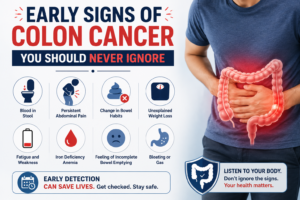
Colon cancer is one of the most common cancers affecting the digestive system. It develops in the large intestine (colon) and often begins as small, harmless growths called polyps. Over time, some of these polyps may become cancerous if they are not detected and treated early.
The good news is that colon cancer is highly treatable when diagnosed in its early stages. Unfortunately, many people ignore the warning signs because they mistake them for common digestive problems. Understanding the early symptoms can help you seek timely medical care and improve treatment outcomes.
What Is Colon Cancer?
Colon cancer starts in the inner lining of the large intestine. As the disease progresses, cancer cells can spread deeper into the colon wall and nearby organs.
People at higher risk include:
- Adults over the age of 45
- Individuals with a family history of colon cancer
- People with inflammatory bowel disease (IBD)
- Those who eat a low-fiber, high-fat diet
- Smokers and excessive alcohol users
- People with obesity or a sedentary lifestyle
Early screening and healthy lifestyle choices play an important role in reducing the risk.
Early Signs of Colon Cancer
Many symptoms of colon cancer develop gradually. While these signs do not always indicate cancer, they should never be ignored.
1. Persistent Changes in Bowel Habits
One of the earliest warning signs is a noticeable change in bowel movements.
This may include:
- Frequent diarrhea
- Persistent constipation
- Alternating diarrhea and constipation
- Narrow or thin stools
- Feeling that the bowel does not empty completely
If these symptoms continue for more than a few weeks, medical evaluation is recommended.
2. Blood in the Stool
Blood in the stool is a symptom that should always be taken seriously.
It may appear as:
- Bright red blood
- Dark or black-colored stools
- Hidden blood detected during laboratory testing
Although hemorrhoids can also cause bleeding, only proper medical evaluation can determine the exact cause.
3. Persistent Abdominal Pain
Ongoing abdominal discomfort is another possible symptom of colon cancer.
Common complaints include:
- Cramping
- Bloating
- Gas pain
- Lower abdominal discomfort
- Feeling of fullness
Pain that continues despite dietary changes should not be ignored.
4. Unexplained Weight Loss
Losing weight without changes in diet or exercise may indicate an underlying health problem.
Possible reasons include:
- Reduced nutrient absorption
- Increased energy use by cancer cells
- Poor appetite
- Digestive disturbances
Any unexplained weight loss deserves medical attention.
5. Constant Fatigue
Colon cancer may cause slow internal bleeding, leading to anemia.
Symptoms of anemia include:
- Weakness
- Tiredness
- Dizziness
- Shortness of breath
- Reduced physical stamina
Persistent fatigue without a clear reason should be evaluated by a healthcare professional.
6. Loss of Appetite
Many patients notice reduced interest in eating as the disease progresses.
Warning signs include:
- Feeling full after small meals
- Reduced hunger
- Nausea
- General digestive discomfort
Risk Factors That Increase Colon Cancer
Certain lifestyle and medical conditions increase the likelihood of developing colon cancer.
Common risk factors include:
- Family history of colorectal cancer
- Diet high in processed and red meat
- Low intake of fruits and vegetables
- Lack of physical activity
- Smoking
- Excessive alcohol consumption
- Obesity
- Diabetes
- Long-term inflammatory bowel disease
Making healthy lifestyle changes can significantly reduce risk.
How Is Colon Cancer Diagnosed?
Doctors use several tests to detect colon cancer at an early stage.
Diagnostic methods may include:
- Physical examination
- Colonoscopy
- Stool tests
- Blood tests
- CT scan
- Biopsy
Early diagnosis greatly improves treatment success.
How to Reduce Your Risk
Simple lifestyle habits can help maintain a healthy digestive system and lower the risk of colon cancer.
Follow these healthy practices:
- Eat a high-fiber diet
- Include fruits and vegetables daily
- Drink enough water
- Exercise regularly
- Maintain a healthy weight
- Avoid smoking
- Limit alcohol intake
- Get recommended colon cancer screening after age 45
These habits also support overall digestive health.
When Should You See a Doctor?
You should seek medical advice if you experience:
- Blood in the stool
- Persistent abdominal pain
- Long-lasting constipation or diarrhea
- Unexplained weight loss
- Continuous fatigue
- Changes in bowel habits lasting more than two weeks
If you notice these symptoms, consulting a gastroenterologist in surat can help identify the cause through appropriate investigations. People searching for a gastroenterologist near surat should choose an experienced digestive health specialist for proper evaluation. Individuals with liver-related digestive concerns may also benefit from consulting a dr liver specialist. If symptoms become severe or require advanced medical care, visiting a trusted stomach hospital near me can ensure timely diagnosis and treatment.
Conclusion
Colon cancer often develops silently, but the body usually gives early warning signs that should never be ignored. Persistent changes in bowel habits, blood in the stool, abdominal pain, unexplained weight loss, and constant fatigue are symptoms that deserve medical attention.
Early detection is the key to successful treatment. Maintaining a healthy diet, staying physically active, and undergoing regular screening can significantly reduce your risk. Paying attention to digestive health today can help prevent serious complications in the future.
Frequently Asked Questions (FAQ)
What is the first sign of colon cancer?
The earliest sign is often a persistent change in bowel habits, including constipation, diarrhea, or narrow stools that continue for several weeks.
Can colon cancer cause stomach pain?
Yes. Colon cancer may cause ongoing abdominal pain, cramping, bloating, or discomfort, especially as the disease progresses.
At what age should colon cancer screening begin?
Most adults should begin routine screening at age 45. People with a family history or other risk factors may need earlier screening.
Is blood in the stool always a sign of colon cancer?
No. Blood in the stool can also result from hemorrhoids or other digestive conditions, but it should always be evaluated by a healthcare professional.
Can colon cancer be prevented?
Although not all cases can be prevented, maintaining a healthy diet, exercising regularly, avoiding smoking, limiting alcohol, and getting routine screening can significantly lower the risk of colon cancer.
