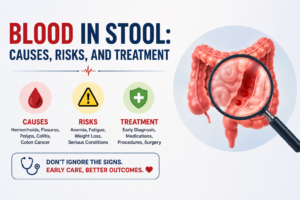
Seeing blood in your stool can be frightening, but it does not always mean you have a serious disease. In some cases, it may be caused by a minor condition like hemorrhoids or an anal fissure. However, blood in the stool can also be an early sign of digestive disorders that require medical attention. Ignoring this symptom may delay diagnosis and treatment, allowing the underlying condition to worsen.
If you notice blood in your stool, especially if it happens repeatedly or is accompanied by abdominal pain, weight loss, or changes in bowel habits, consult a gastroenterologist in surat for a thorough evaluation.
What Does Blood in Stool Mean?
Blood in the stool indicates bleeding somewhere in the digestive tract. The color of the blood often provides clues about where the bleeding is occurring.
There are two common types:
- Bright red blood, usually from the lower digestive tract
- Dark or black stool, which may indicate bleeding from the stomach or upper intestines
The amount of blood can range from a few drops on toilet paper to larger amounts mixed with stool. Even a small amount should not be ignored if it occurs repeatedly.
Common Causes of Blood in Stool
Several digestive conditions can cause bleeding. Some are mild, while others require immediate medical care.
1. Hemorrhoids (Piles)
Hemorrhoids are swollen veins in the rectum or anus and are one of the most common causes of bright red blood.
Symptoms include:
- Blood after passing stool
- Pain during bowel movements
- Itching around the anus
- Swelling near the anal area
2. Anal Fissure
An anal fissure is a small tear in the lining of the anus, usually caused by passing hard stools.
Common signs include:
- Sharp pain during bowel movements
- Small streaks of bright red blood
- Burning sensation after passing stool
3. Inflammatory Bowel Disease (IBD)
Inflammatory bowel diseases such as Crohn’s disease and ulcerative colitis can cause chronic inflammation of the digestive tract.
Symptoms may include:
- Bloody diarrhea
- Abdominal cramps
- Fatigue
- Weight loss
- Frequent bowel movements
4. Stomach Ulcers
Ulcers in the stomach or upper intestine may cause internal bleeding.
Possible symptoms include:
- Black or tarry stools
- Burning stomach pain
- Nausea
- Vomiting blood in severe cases
5. Colon Polyps or Colorectal Cancer
Blood in the stool may sometimes be an early warning sign of colon polyps or colorectal cancer, especially in older adults.
Warning signs include:
- Persistent blood in stool
- Unexplained weight loss
- Long-lasting constipation or diarrhea
- Feeling that the bowel does not empty completely
Early diagnosis greatly improves treatment outcomes.
Risk Factors
Certain factors increase the chances of developing digestive conditions that may cause blood in the stool.
These include:
- Low-fiber diet
- Chronic constipation
- Obesity
- Smoking
- Excessive alcohol consumption
- Family history of colorectal cancer
- Long-term inflammatory bowel disease
- Increasing age
Maintaining a healthy lifestyle can reduce the risk of many digestive disorders.
Symptoms That Should Not Be Ignored
Seek medical attention immediately if blood in the stool is accompanied by:
- Severe abdominal pain
- Heavy bleeding
- Black, sticky stools
- Persistent vomiting
- Sudden weight loss
- Continuous fatigue
- Dizziness or fainting
- Fever along with digestive symptoms
Prompt evaluation can help prevent serious complications.
How Is the Cause Diagnosed?
A doctor will first review your medical history and perform a physical examination. Depending on your symptoms, additional investigations may be recommended.
Diagnostic tests may include:
- Blood tests
- Stool examination
- Colonoscopy
- Upper GI endoscopy
- CT scan or ultrasound
- Biopsy if required
If liver-related digestive problems are suspected, a dr liver specialist may also be involved in your treatment plan.
Treatment Options
Treatment depends on the underlying cause of the bleeding.
Common treatment options include:
- Medications to reduce inflammation
- Medicines for acidity or ulcers
- Antibiotics for certain infections
- Lifestyle and dietary modifications
- Treatment for hemorrhoids or fissures
- Endoscopic procedures
- Surgery for severe digestive diseases
Some advanced digestive disorders may require specialized care in gastroenterologist near surat centers with expertise in gastrointestinal conditions.
Tips to Maintain a Healthy Digestive System
Healthy habits can help reduce the risk of digestive disorders and improve bowel health.
Follow these simple tips:
- Eat a high-fiber diet
- Drink enough water daily
- Exercise regularly
- Avoid excessive spicy and processed foods
- Maintain a healthy body weight
- Do not ignore constipation
- Avoid smoking and excessive alcohol
- Schedule regular health check-ups if you have a family history of digestive diseases
If symptoms continue or worsen, visiting a trusted stomach hospital near me can help ensure timely diagnosis and appropriate treatment.
When Should You Visit a Doctor?
Do not delay medical consultation if:
- Blood appears in your stool more than once
- Bleeding is heavy
- Stool becomes black or tarry
- You have persistent abdominal pain
- You experience unexplained weight loss
- There is a family history of colorectal cancer
- Digestive symptoms continue despite home care
Early diagnosis often leads to simpler and more effective treatment.
Conclusion
Blood in the stool should never be ignored. While common conditions such as hemorrhoids or anal fissures are often responsible, it can also be a sign of more serious digestive diseases that require prompt medical attention. Understanding the possible causes, recognizing warning signs, and seeking timely evaluation can help prevent complications and improve long-term digestive health.
A balanced diet, adequate hydration, regular exercise, and routine health check-ups play an important role in maintaining a healthy digestive system and reducing the risk of gastrointestinal disorders.
Frequently Asked Questions (FAQ)
Is blood in stool always a sign of cancer?
No. Blood in the stool is commonly caused by hemorrhoids, anal fissures, infections, or inflammatory bowel disease. However, persistent bleeding should always be evaluated by a doctor to rule out serious conditions.
What color of blood is more concerning?
Bright red blood usually comes from the lower digestive tract, while black or tarry stools may indicate bleeding from the stomach or upper digestive tract and require immediate medical attention.
Can constipation cause blood in stool?
Yes. Chronic constipation can lead to hemorrhoids or anal fissures, both of which commonly cause small amounts of bright red blood during bowel movements.
Which foods help improve digestive health?
Foods rich in fiber such as fruits, vegetables, whole grains, legumes, and adequate water intake help maintain regular bowel movements and support digestive health.
When should I seek emergency medical care?
Seek immediate medical attention if you experience heavy bleeding, black stools, severe abdominal pain, dizziness, fainting, or vomiting blood, as these may indicate a serious digestive condition requiring urgent treatment.
