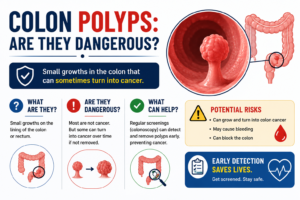
Colon polyps are small growths that develop on the inner lining of the large intestine (colon). Most colon polyps are harmless, but some can gradually turn into colorectal cancer if they are not detected and removed early. This is why regular screening and timely treatment are essential, especially for people over the age of 45 or those with a family history of colon cancer.
Many digestive conditions do not show symptoms in their early stages. Regular health check-ups and colonoscopy screenings can help identify polyps before they become a serious problem. If you experience ongoing digestive symptoms, consulting a gastroenterologist in surat can help ensure early diagnosis and proper care.
What Are Colon Polyps?
A colon polyp is an abnormal tissue growth that forms on the inner wall of the colon or rectum. Polyps can vary in size and number. Some people develop only one polyp, while others may have multiple polyps.
The most common types include:
- Adenomatous polyps (can become cancerous)
- Hyperplastic polyps (usually non-cancerous)
- Sessile serrated polyps
- Inflammatory polyps
Although most polyps do not cause harm immediately, doctors recommend removing them because certain types have the potential to develop into cancer over time.
Are Colon Polyps Dangerous?
Not every colon polyp is dangerous, but they should never be ignored. Some polyps remain harmless throughout life, while others slowly change into cancerous growths.
The risk depends on several factors, including:
- Size of the polyp
- Number of polyps
- Type of polyp
- Family history of colorectal cancer
- Patient’s age
The good news is that colon cancer is often preventable when polyps are detected and removed at an early stage.
Common Symptoms of Colon Polyps
Many people have no symptoms at all. Polyps are often discovered during routine screening tests.
When symptoms appear, they may include:
- Blood in the stool
- Rectal bleeding
- Persistent constipation
- Frequent diarrhea
- Abdominal pain or cramps
- Unexplained fatigue
- Change in bowel habits
- Iron deficiency anemia
If these symptoms continue for several weeks, medical evaluation is recommended.
What Causes Colon Polyps?
Doctors cannot always determine the exact cause, but several factors increase the risk.
Common risk factors include:
- Age above 45 years
- Family history of colon cancer
- Obesity
- Smoking
- Excessive alcohol consumption
- Low-fiber diet
- High intake of processed foods
- Physical inactivity
- Type 2 diabetes
- Chronic inflammatory bowel disease
Maintaining a healthy lifestyle can significantly reduce the chances of developing colon polyps.
How Are Colon Polyps Diagnosed?
Early diagnosis plays a major role in preventing complications. Several tests help identify colon polyps before they become dangerous.
Diagnostic methods include:
- Colonoscopy
- CT colonography
- Stool-based screening tests
- Flexible sigmoidoscopy
- Biopsy when required
A colonoscopy is considered the most effective test because it allows doctors to detect and remove polyps during the same procedure.
Treatment for Colon Polyps
The treatment depends on the size, number, and type of polyps.
Common treatment options include:
- Removal during colonoscopy
- Polypectomy
- Follow-up colonoscopy
- Surgical removal for large or difficult polyps
- Regular monitoring in high-risk patients
In rare cases where cancer is detected or complications arise, advanced treatment may be necessary.
Patients looking for specialized digestive care often search for a gastroenterologist near surat for comprehensive evaluation and treatment.
Can Colon Polyps Be Prevented?
Although not every case can be prevented, healthy lifestyle choices greatly reduce the risk.
Tips for prevention include:
- Eat plenty of fruits and vegetables
- Include whole grains in your diet
- Increase daily fiber intake
- Exercise regularly
- Maintain a healthy body weight
- Avoid smoking
- Limit alcohol consumption
- Stay hydrated
- Get routine colorectal screening after age 45
These habits support both digestive and overall health.
When Should You See a Doctor?
Do not ignore digestive symptoms that last for several weeks.
Seek medical advice if you notice:
- Blood in your stool
- Persistent abdominal pain
- Long-term constipation
- Frequent diarrhea
- Sudden weight loss
- Ongoing fatigue
- Unexplained changes in bowel movements
Timely consultation can help detect polyps before they develop into serious conditions. People with complex digestive disorders may also benefit from evaluation by a dr liver specialist, as liver health and digestive function are closely connected.
Importance of Regular Colon Screening
Regular screening is one of the most effective ways to prevent colorectal cancer.
Benefits of screening include:
- Detecting polyps before they become cancerous
- Early treatment with minimal complications
- Lower risk of colorectal cancer
- Better long-term digestive health
- Peace of mind for high-risk individuals
Doctors generally recommend routine colonoscopy beginning at age 45, or earlier for people with a family history of colorectal cancer.
Conclusion
Colon polyps are common and are often harmless, but some types can become cancerous if left untreated. Since many people experience no symptoms, regular screening is the best way to detect and remove polyps early.
Adopting healthy eating habits, staying physically active, and scheduling routine digestive check-ups can significantly reduce your risk. If you experience persistent digestive symptoms, seek expert evaluation instead of delaying treatment. Those requiring advanced digestive care can also consult a trusted stomach hospital near me for timely diagnosis and comprehensive management.
Frequently Asked Questions (FAQ)
What are colon polyps?
Colon polyps are abnormal growths that develop on the inner lining of the large intestine. Most are harmless, but some may become cancerous over time.
Can colon polyps turn into cancer?
Yes. Certain types, especially adenomatous polyps, have the potential to develop into colorectal cancer if they are not removed.
What is the best test for detecting colon polyps?
A colonoscopy is considered the most accurate screening test because it allows doctors to detect and remove polyps during the same procedure.
Can colon polyps be prevented?
While prevention is not always possible, eating a high-fiber diet, exercising regularly, maintaining a healthy weight, avoiding smoking, and undergoing routine screening can lower the risk.
At what age should colon cancer screening begin?
Most adults should begin colorectal cancer screening at age 45. People with a family history or other risk factors may need earlier screening based on their doctor’s recommendation.
